


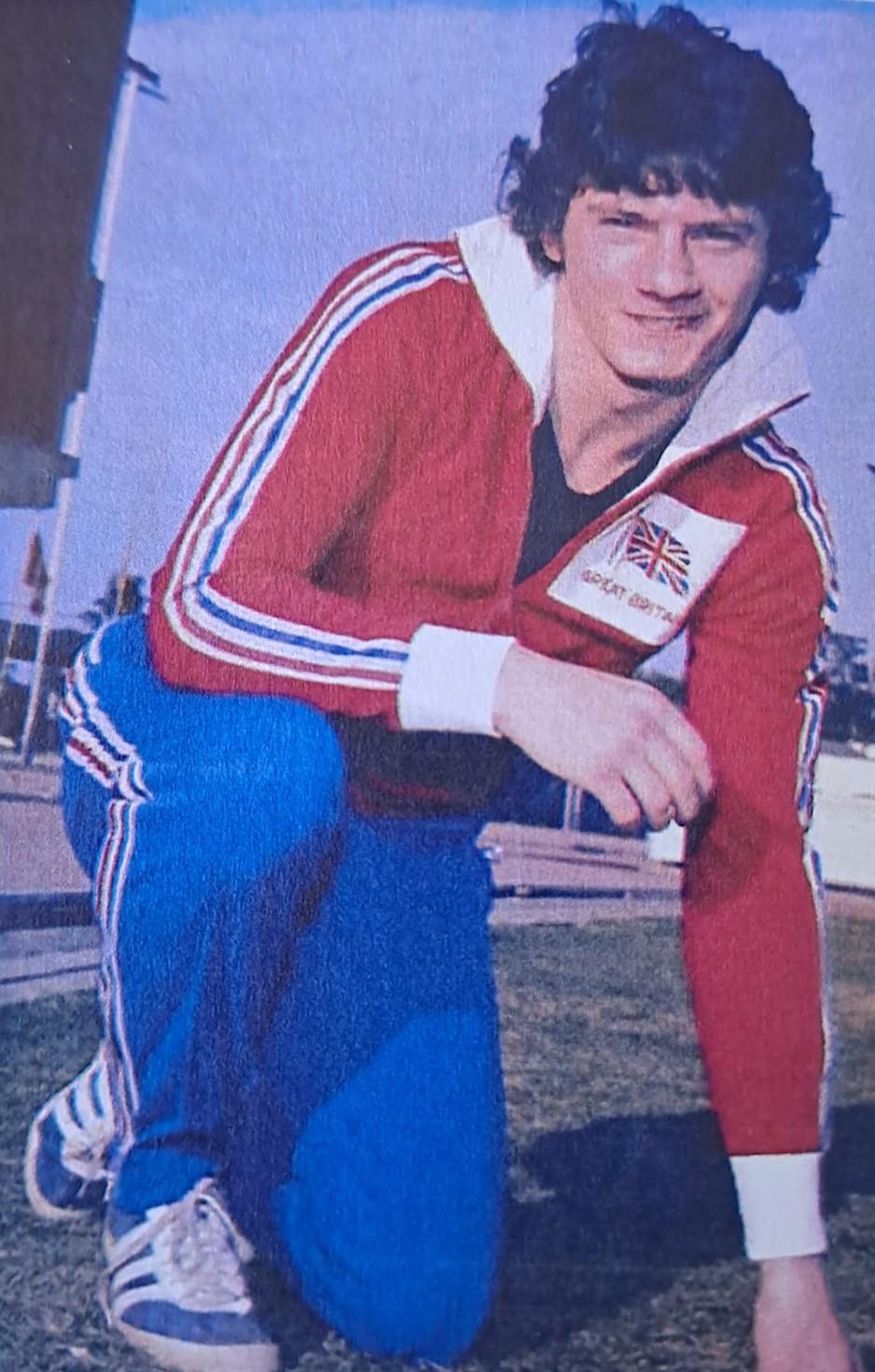

A PROMISING young athlete who defied doctors by becoming an Olympian has died at the age of 69.
Andrew McMaster was told as a youngsters that he may never play sport again, yet made the 100m quarter-finals at the 1980 Moscow Olympics.
His life and career would take him from the running track at Ross High School, Tranent, to competing with Team GB across the world.
Known to most as Drew, he died in Edinburgh on November 4, leaving his friends “absolutely devastated” but remembering a man who lived an extraordinary life.
Team Scotland has also paid tribute to the sprinter, saying they were “deeply saddened” to learn of his passing.
Drew attended Tranent Primary School, where he enjoyed taking part in football and running at a local sports field, before moving to Ross High School, when a coach spotted his talents on the track and asked whether he would run more seriously with a squad in Edinburgh.
After a compulsory NHS check-up, he was found to be deaf in his left ear and his toes were growing twisted; at age seven, his toes were operated on successfully, but his surgeon said that he would be unlikely to play sports.
However, he was back playing football and racing within six weeks.
He trained at West Edinburgh Saughton Athletics Track under coach Jim Bradley, who also coached famous Tranent sprinter George McNeill.
When asked by Jim what he hoped to get out of sprinting, Drew told him: “I want to be the best.”
He trained with the squad seven days a week and quickly found success in the sport, winning every Scottish title for the 100m and 200m at each age group.
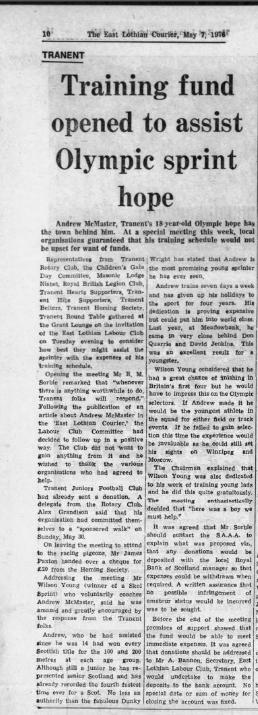
An article in the East Lothian Courier when he was 18 documented the costs of training and competing at a high level. People and groups from the local community came together to donate cash to ensure that there were no barriers to his rise in the world of athletics.

In 1976, he won the Scottish, AAA indoor and junior 200m titles, going on to win the Scottish 200m title again in 1977 and 1978.
Drew competed internationally on 52 occasions for both Team Scotland and Team GB.
He was part of Scotland's historic men's 4x100m relay team that struck gold at the Edmonton 1978 Commonwealth Games, alongside Allan Wells, David Jenkins and Cameron Sharp.
He was runner-up over 100m at the UK Athletics Championships in 1978 and over 200m in 1980.
Away from the track, Drew married fellow Scottish international athlete Elaine Davidson at Christmas in 1979.
That year, he represented Great Britain at the Moscow Olympics, reaching the 100m quarter-finals and anchoring the sprint relay team to fourth place in the final.
Their time of 38.62 seconds was a British record.
In 1981, he became British 100m champion as the highest-placed British athlete at the AAA Championships, finishing third behind Mel Lattany and Ernest Obeng.
He also won the Scottish 100m title in 1981 and 1982, before returning to the Commonwealth Games in Brisbane in 1982.
There, he won bronze with the sprint relay team and reached the 100m final, finishing eighth.
After retiring, he pivoted to work in finance and as an estate agent, setting up his own business with offices in Tranent and Musselburgh, and later completed a HND in sports science and sports development.
He took time away from his career when Elaine was diagnosed with dementia and passed away.
Debbie Boby, one of Drew’s closest friends for more than three decades, was “absolutely devastated” by his death.
Debbie and her sister Karen – who Drew often referred to as “the twins” – met him when he was an estate agent in Tranent and they remained close for 34 years.
Debbie said: “We'll always love Drew and he'll always be in our hearts and thoughts.
“We saw a lot of each other, even just bumping into each other but we spent some really nice times together, a lot of laughter, a lot of joy, a lot of trust.
“Just a lot of love for each other.”
He spent the last 18 years of his life with Ruth Quinn, who died in April last year, and the couple lived in Ormiston together.


Share