


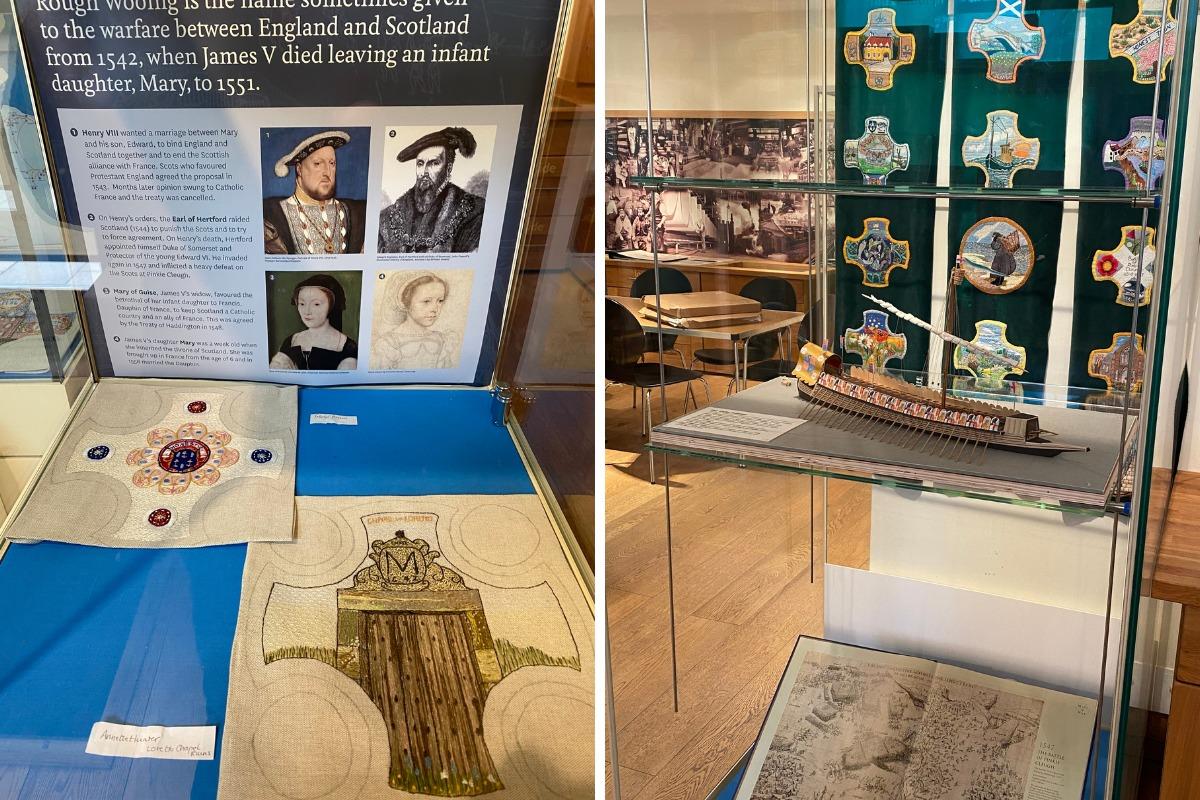
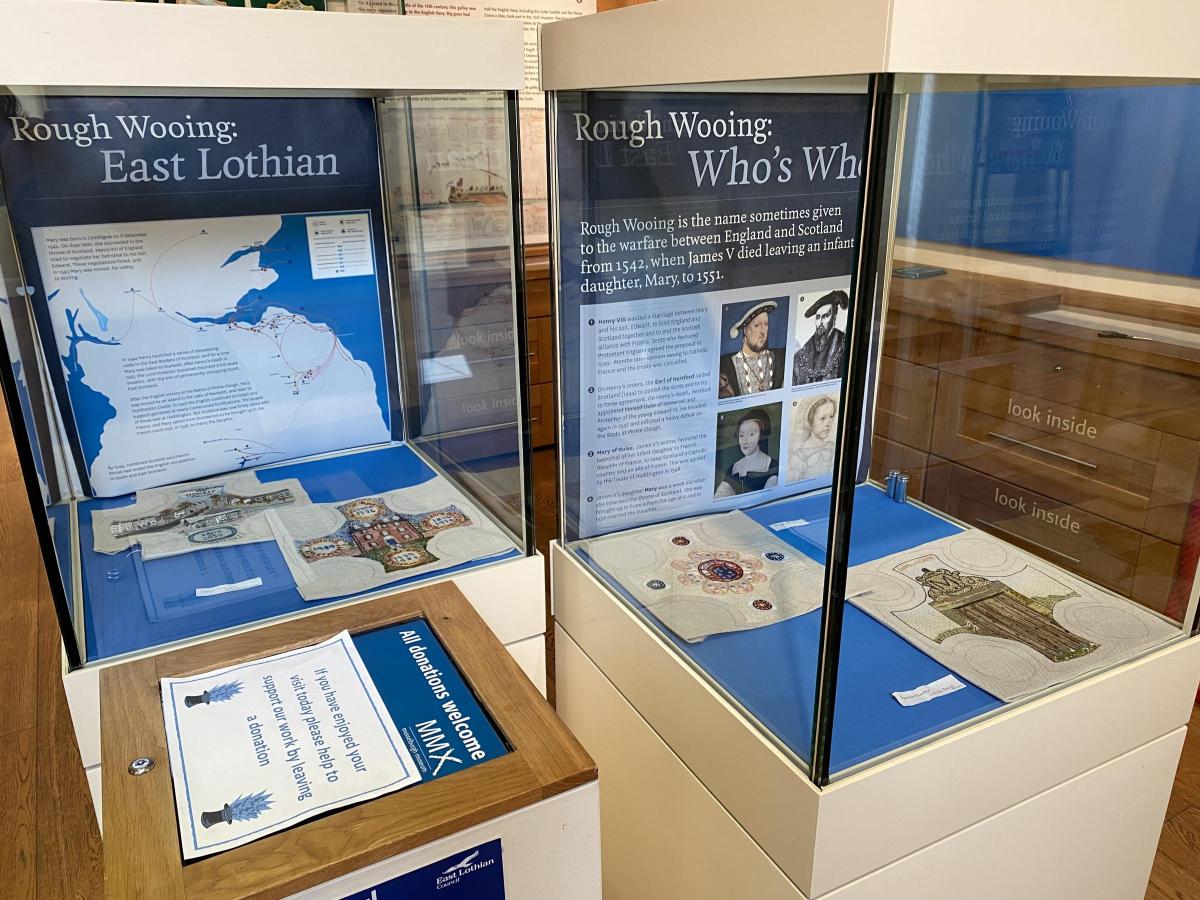
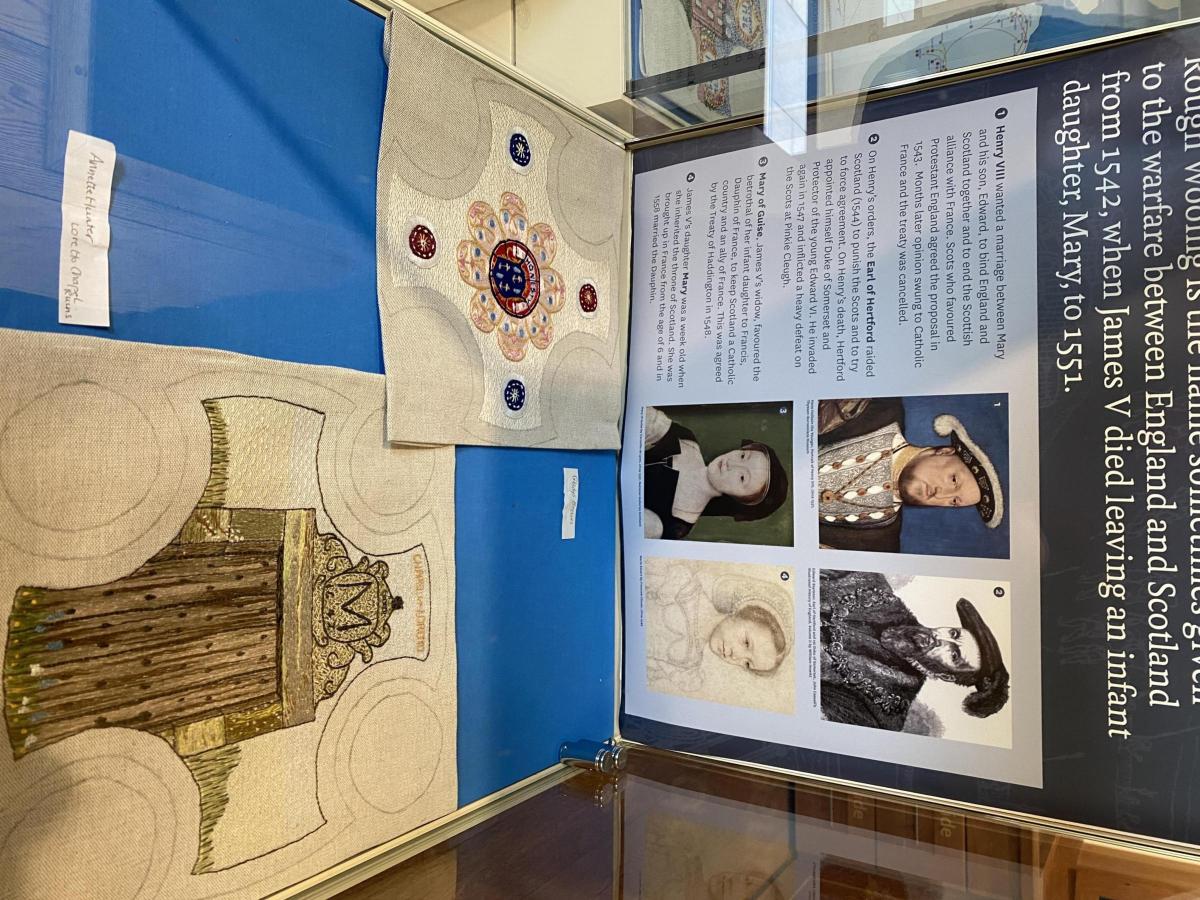

THE story of a tapestry being created to mark the Battle of Pinkie Cleugh, which was fought in the Musselburgh area, will be shared in an exhibition opening today (Thursday).
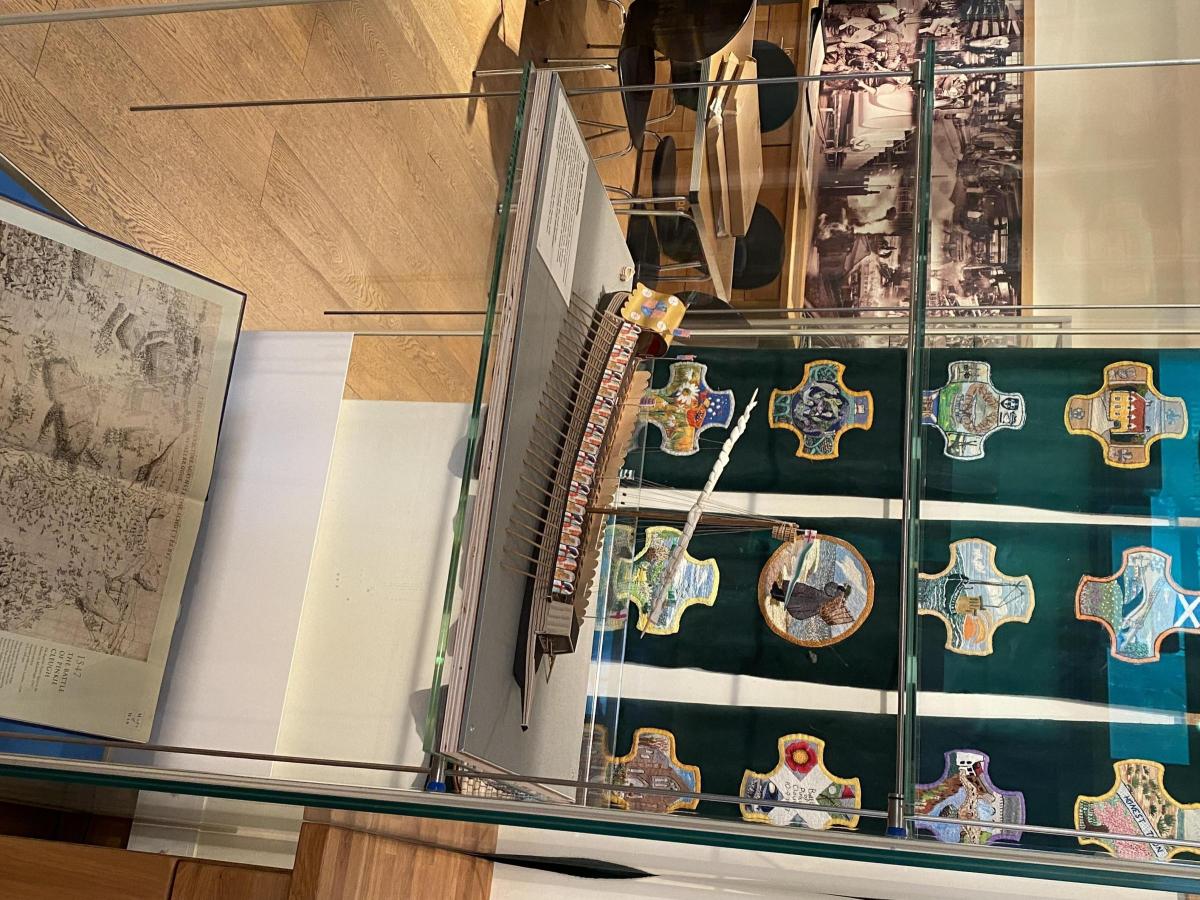
A work of community art, the project will be shown at Musselburgh Museum for two months.
The exhibition, called ‘Sewing the Threads of History – The Story of the Battle of Pinkie Cleugh Tapestry’, highlights the tapestry, designed by East Lothian artist Andrew Crummy, who is also behind many other Scottish tapestries, including the Battle of Prestonpans and Great Tapestry of Scotland.
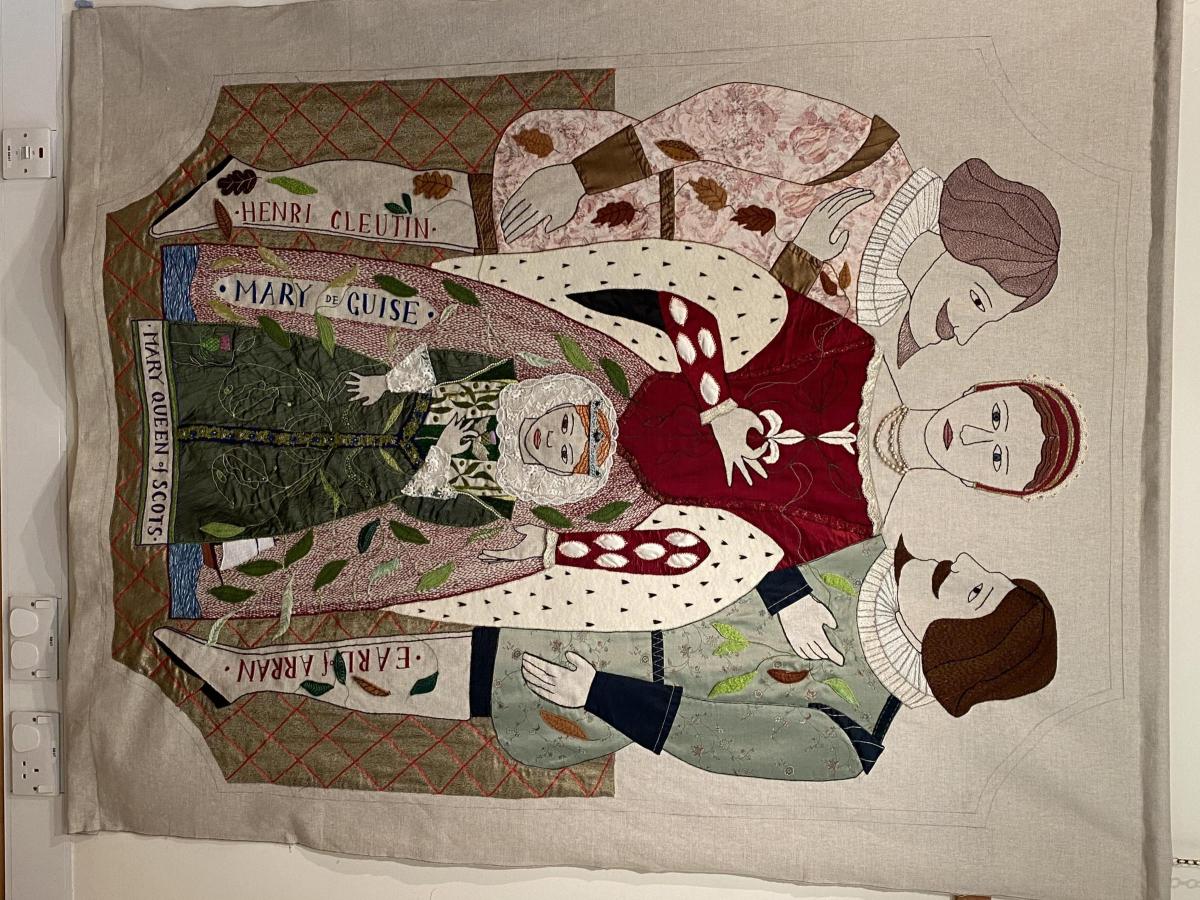
The needlework, being carried out by a team of stitchers, tells the story of the battle, which took place on September 10, 1547, as well as the history of the Musselburgh area, seen through the eyes of the stitchers.

Mr Crummy said: “The Battle of Pinkie Cleugh Tapestry takes its inspiration from the Marian Hangings, which were sewn by Scotland’s most famous stitcher, Mary Queen of Scots.
“The main large hangings, which will measure about two metres by three metres when finished, will tell the story of the battle, while the crosses and roundels surrounding a central embroidery will tell the stitchers’ own stories about Musselburgh.”
Pinkie Cleugh was a battle between the armies of Scotland and England, led by the Earl of Arran, Regent of Scotland, and the Lord Protector of England, the Duke of Somerset, whose aim was to secure the betrothal of the nine-year-old King Edward VI of England to the five-year-old Mary Queen of Scots.
It was the last pitched battle between Scottish and English armies, and is seen as the first modern battle in the British Isles. The outcome was a disastrous defeat for the Scots, with 10,000 troops massacred in the rout, which became known as Black Saturday.
But the immediate effect of this defeat was to revive the ‘Auld Alliance’ between Scotland and France – and to bring about the betrothal of Mary to the Dauphin of France.
A tapestry spokesperson said: “Although this is an important battle historically, it is believed to be largely overlooked and it is hoped that the tapestry will help to tell the story of this important piece of history.”
The exhibition will be open every Thursday, Friday and Saturday from 10.30am to 4pm during April and May.


Share